
Short answer: in western Washington the lawn calendar is driven by rain, not heat. Fertilize in spring and again in fall, mow high all season, deal with moss by fixing the shade and drainage rather than by killing it repeatedly, and expect summer dormancy to be normal rather than a failure.
Most lawn advice is written for places with dry winters and hot summers. Arlington has the opposite. We get roughly nine months of moisture and a genuinely dry stretch in midsummer, and that reversal changes almost every timing recommendation you will read online.
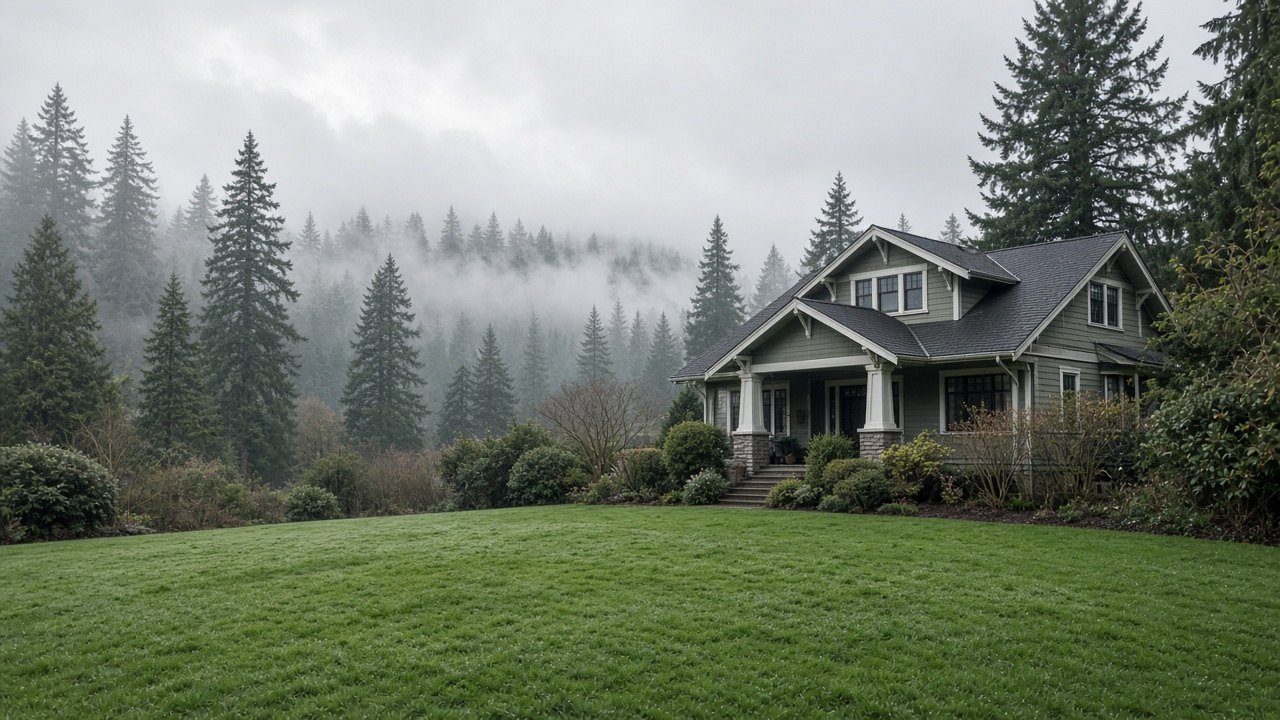
Late winter into early spring: clean up, then wait
The temptation in the first dry week of March is to do everything at once. Resist most of it.
Rake off the matted leaves and winter debris so light reaches the crowns. Sharpen the mower blade before the first cut, because a dull blade tears grass rather than cutting it and the torn tips brown out. Stay off the lawn while the soil is saturated, since walking on soggy ground compacts it and compaction is the root cause of half the problems people blame on moss.
Hold the fertilizer until the grass is actively growing, usually once soil temperatures come up in April. Feeding a lawn that is still dormant mostly feeds the weeds.
Spring: feed, seed the thin spots, and mow high
Spring is when a northwest lawn does most of its work. The grass grows quickly, the soil is warm and still wet, and anything you seed now establishes readily.
Three things matter most:
- Fertilize once growth is underway. A slow-release product avoids the surge of soft growth that a fast one produces, and soft growth is what disease follows.
- Overseed thin and bare patches. Perennial ryegrass and fine fescue both do well here. Seed into raked, loosened soil and keep it damp, which spring usually handles for you.
- Raise the mower. Cut at 2.5 to 3 inches. Taller grass shades out weed seedlings and grows deeper roots, which is the free insurance policy for July.
A soil test is worth doing once. Western Washington soils tend to run acidic under all that rain, and if yours is low the lime application actually matters. Guessing at lime is how people spend money on nothing for years.
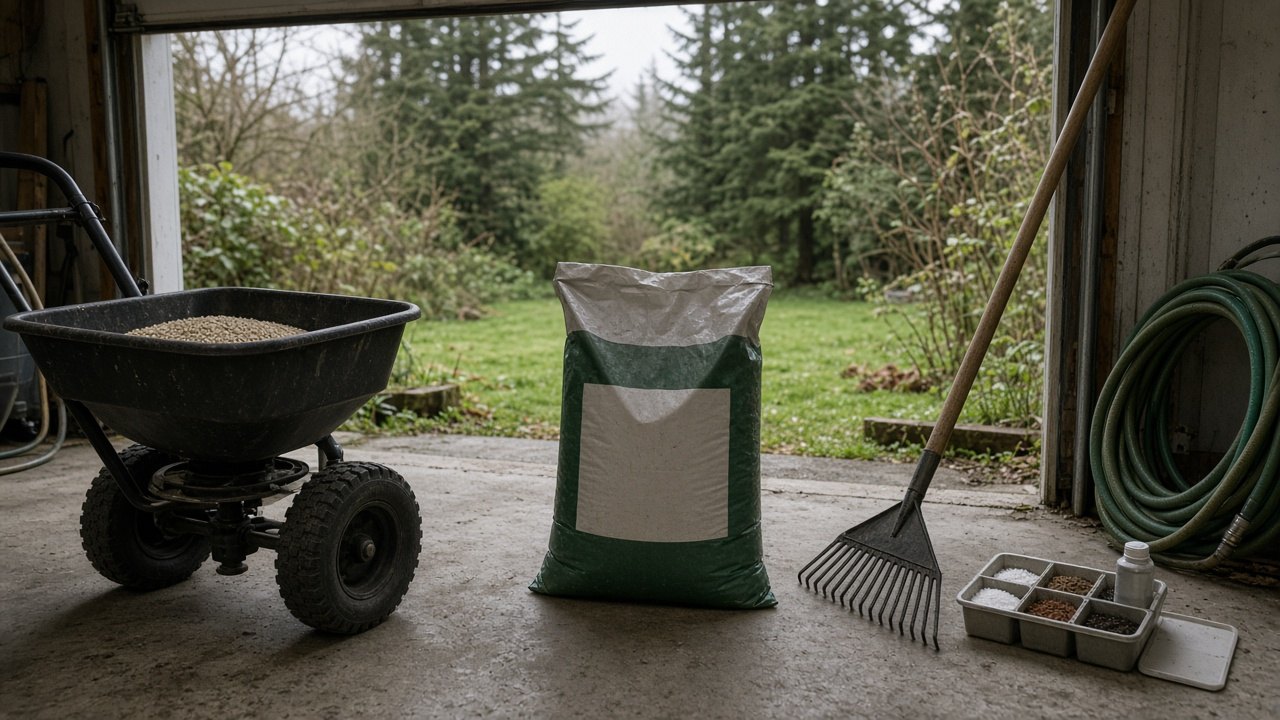
Summer: let it go quiet, or water properly
Our dry season is short but real. You have two honest options and one bad one.
Let it go dormant. Cool season grasses brown out and go quiet when it gets dry, and they come back when the rain returns in fall. A dormant lawn is not a dead lawn. This is the low-effort, low-water choice and it is perfectly legitimate.
Water deeply and infrequently. Roughly an inch a week, delivered in one or two long soakings rather than daily sprinkles. Deep watering pushes roots down. Light daily watering keeps roots shallow and makes the lawn more fragile, not less.
The bad option is doing half of each: watering just enough to keep pulling the lawn in and out of dormancy. That is harder on the grass than either committing to water or committing to letting it rest.
Keep the mower high through summer, cut less often as growth slows, and avoid fertilizing a stressed dormant lawn.
Fall: the most important season here
If you only do one thing a year, do it in September or October. Fall is when a northwest lawn recovers.
The rain returns, the soil is still warm, and weed pressure has dropped. Grass seeded now roots well before winter. Fertilizer applied now goes into root development rather than a flush of top growth, which is exactly what you want heading into the wet months.
Fall is also the right time for the physical work:
- Aerate if the soil is compacted, which most lawns in a wet climate are. Core aeration relieves compaction and lets water and air reach the roots.
- Overseed right after aerating, while the holes are open.
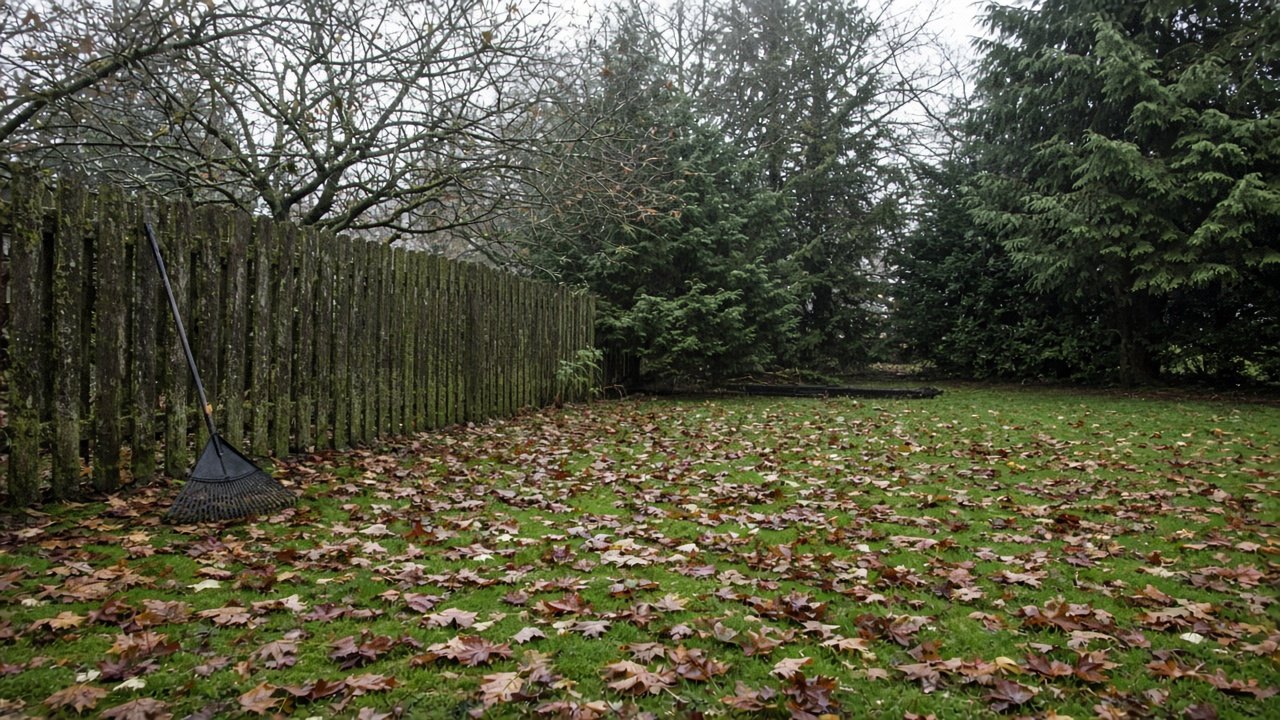
- Rake leaves off regularly. A wet mat of maple and alder leaves will smother grass and hand the space to moss.
- Fertilize once, with a product suited to fall.
Moss: treat the cause, not the symptom
Moss is the most common lawn complaint around here, and the most commonly mistreated. Moss does not push grass out. It moves into places where grass has already given up.
Grass gives up because of shade, compacted soil, poor drainage, acidic soil, or being mowed too short. Moss killer removes the moss you have. If none of those conditions change, it comes back, usually the same year.
The durable fix is unglamorous: thin overhanging branches to get more light in, aerate to relieve compaction, correct drainage where water sits, lime if a soil test says the pH is low, and raise the mowing height so the grass can actually compete. Kill the moss if you like, but do it as the last step, and then seed the bare ground before something else claims it.
In genuinely deep shade under fir trees, accept reality. Some corners of a northwest yard will never grow good grass. A shade-tolerant groundcover or a bark bed is a better answer than fighting the same patch every spring.
Winter: mostly leave it alone
Keep the leaves off, stay off the grass when it is soggy or frosted, and clean and store the mower properly. Run the fuel down or stabilize it, pull the battery on a cordless, and get the blade sharpened before spring rather than in the first warm week when everyone else remembers.
We sharpen mower blades at the counter, and winter is the calm time to bring one in.
The whole year in one glance
- Late winter: rake debris, sharpen the blade, stay off wet soil.
- Spring: fertilize once growth starts, overseed thin spots, mow at 2.5 to 3 inches, lime only if a test calls for it.
- Summer: either water deeply once or twice a week, or let it go dormant. Do not split the difference.
- Fall: the big one. Aerate, overseed, fertilize, and keep leaves cleared.
- Winter: leaves off, stay off wet grass, service the mower.
Seed, fertilizer, spreaders, rakes, aeration equipment, and soil test kits are all in our lawn and garden department. Stop by 215 N Olympic Ave, or call (360) 435-5523 and tell us what your yard is doing. Half the time the answer is drainage.
Frequently asked questions
When should I fertilize my lawn in western Washington?
Twice a year works for most lawns here: once in spring after growth is clearly underway, and once in fall. The fall feeding is the more valuable of the two because it goes into root development ahead of the wet season.
Why is my Pacific Northwest lawn full of moss?
Moss fills space where grass has already thinned, usually because of shade, compacted soil, poor drainage, acidic soil, or mowing too short. Moss killer clears the symptom. Unless you change the underlying condition, it returns.
How short should I cut my grass here?
Around 2.5 to 3 inches. Taller grass shades out weed seedlings, develops deeper roots, and handles the dry summer stretch far better than a short cut.
Should I water my lawn through the summer?
Either commit to about an inch a week in one or two deep soakings, or let the lawn go dormant and green up when the rain returns. Both are fine. Light daily watering is the option to avoid, because it keeps roots shallow.
When is the best time to overseed a lawn in Arlington?
Early fall. The soil is still warm, the rain has returned to keep seed moist, and weed competition has dropped. Spring is the second-best window if you missed fall.
Do I need to lime my lawn?
Only if a soil test says so. Western Washington soils often run acidic from heavy rainfall, but applying lime without testing is guesswork. A test kit costs little and settles the question.