
Short answer: pick the knife by the blade length your job actually needs and the way you carry it, not by the biggest one on the shelf. A 2.5 to 3 inch blade handles almost everything most people cut in a week. Come by 215 N Olympic Ave and hold a few, because grip is the part you cannot judge from a photo.
We sell knives, and we also sharpen them, which means we see what comes back after a year of real use. That is a useful vantage point. The knives that get carried are rarely the ones people were most excited about in the store.
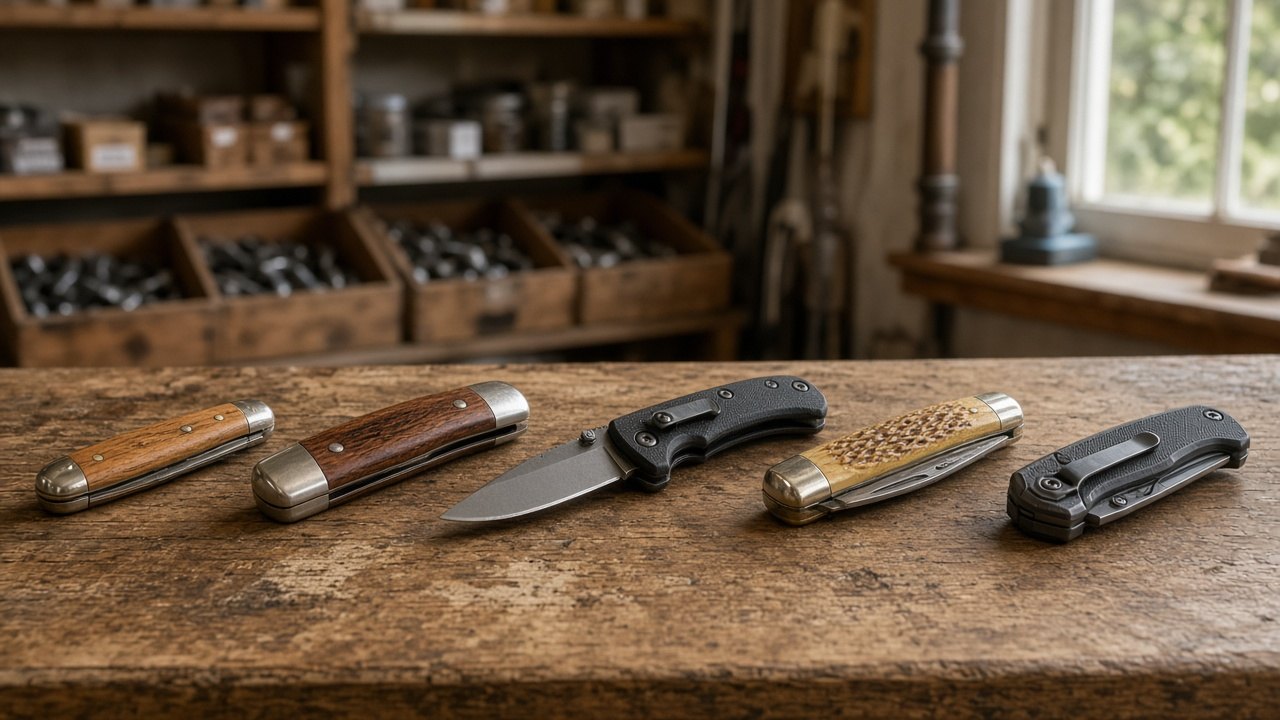
Start with what you actually cut
Most people buy a knife for an imagined worst case and then carry it through a hundred ordinary ones. Before you look at steel or lock types, think honestly about the last ten times you reached for a blade.
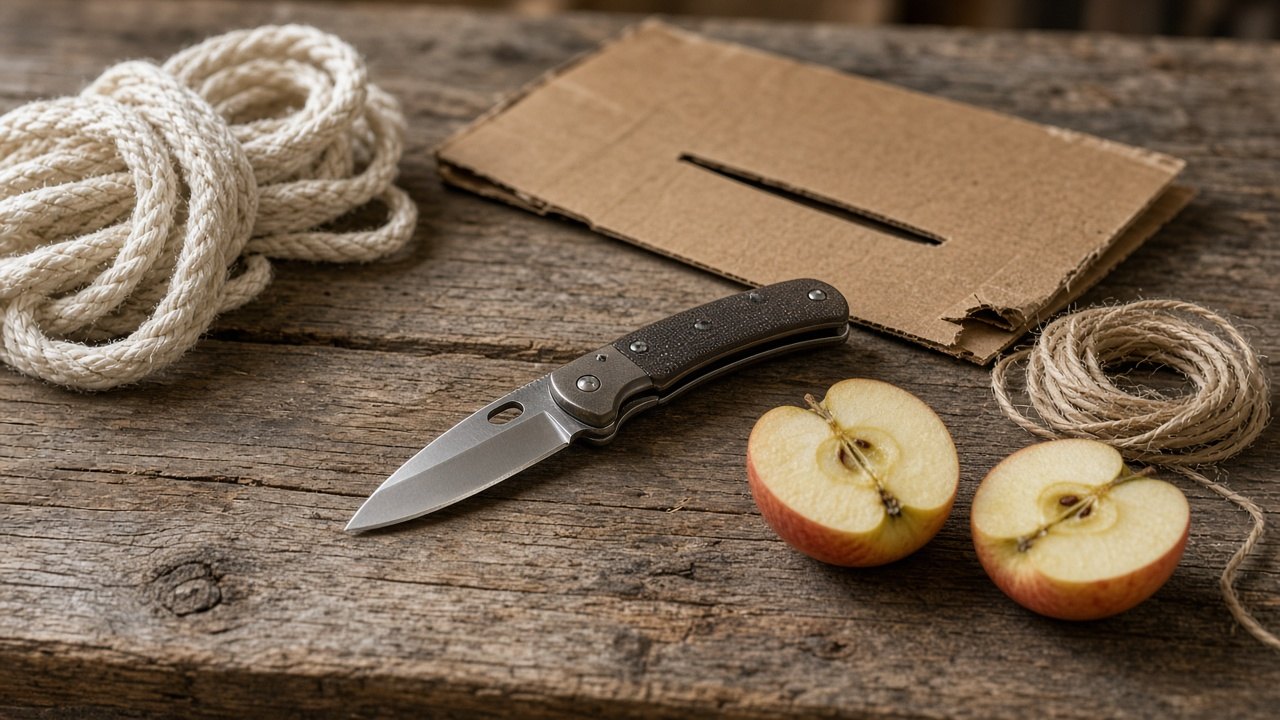
For most of us that list is boring: cardboard, zip ties, plastic clamshell packaging, twine, tape on a box, a loose thread, an apple at lunch. A 2.5 to 3 inch blade does all of that comfortably. It also fits in a pocket without announcing itself and stays legal in most everyday situations.
If your list looks different, the knife should too. Someone processing game, cutting rope on a boat, or working through insulation and roofing felt all day has a real case for a longer, stouter blade. That is a different tool for a different week.
Blade shape matters more than most people expect
Shape decides what the knife is good at far more than the brand on the handle.
- Drop point: the safe default. Strong tip, useful belly, good at almost everything. If you are not sure, buy this.
- Clip point: finer, more precise tip. Better for detail work and piercing, easier to snap if you pry with it.
- Sheepsfoot or wharncliffe: straight edge, blunt tip. Excellent for cutting on a flat surface and for anyone who does not want a sharp point near their fingers or a hose line.
- Tanto: very strong tip, awkward for slicing. Chosen for looks more often than for the job.
If you cut mostly boxes and packaging, a sheepsfoot will make you happier than a dramatic clip point. It sounds like a small distinction and it changes daily use noticeably.
Steel: the tradeoff nobody explains at the counter
Every knife steel sits somewhere on a line between easy to sharpen and slow to dull. You cannot max both.
Softer stainless steels take an edge quickly on a basic stone and lose it sooner. Harder, more wear-resistant steels hold that edge much longer and take real patience or better equipment to bring back. Neither is the right answer in the abstract.
The honest question is whether you will maintain it. If you enjoy sharpening, a premium steel rewards you. If a knife only gets touched up when it stops cutting rope cleanly, a simpler steel that comes back in five minutes on a stone serves you better. We sharpen blades here, so the second option is not a compromise, it just means the maintenance happens at our counter instead of your bench.
Locks, and the one thing worth checking
A traditional slipjoint has no lock. It has a backspring that holds the blade open under normal cutting and folds if you push it backward hard. Generations got by with that, and a slipjoint carries lighter and looks better in a pocket.
A locking blade, whether liner, frame, or lockback, resists that backward force. If you are cutting toward yourself, working on a ladder, or applying real pressure, a lock is genuine safety, not a feature list item.
Whatever you choose, check the same thing before you buy: open and close it ten times. Can you do it with one hand if you need to? Does the lock disengage without putting your finger in the blade path? Does it feel gritty? A knife that is annoying to open is a knife that stays in the drawer.
The part you can only judge in person
Grip is why we keep saying stop in. A handle that looks great online can be too slim for a large hand, too slick when wet, or shaped so a hot spot forms after twenty cuts. Northwest weather means you will use it with damp hands more than you would like.
Hold it. Close your hand around it. Mimic the cut you actually make. Textured G10 and jigged bone grip well when wet, polished wood looks beautiful and gets slippery, smooth aluminum is somewhere in between. Two minutes at the counter tells you more than an hour of reading.
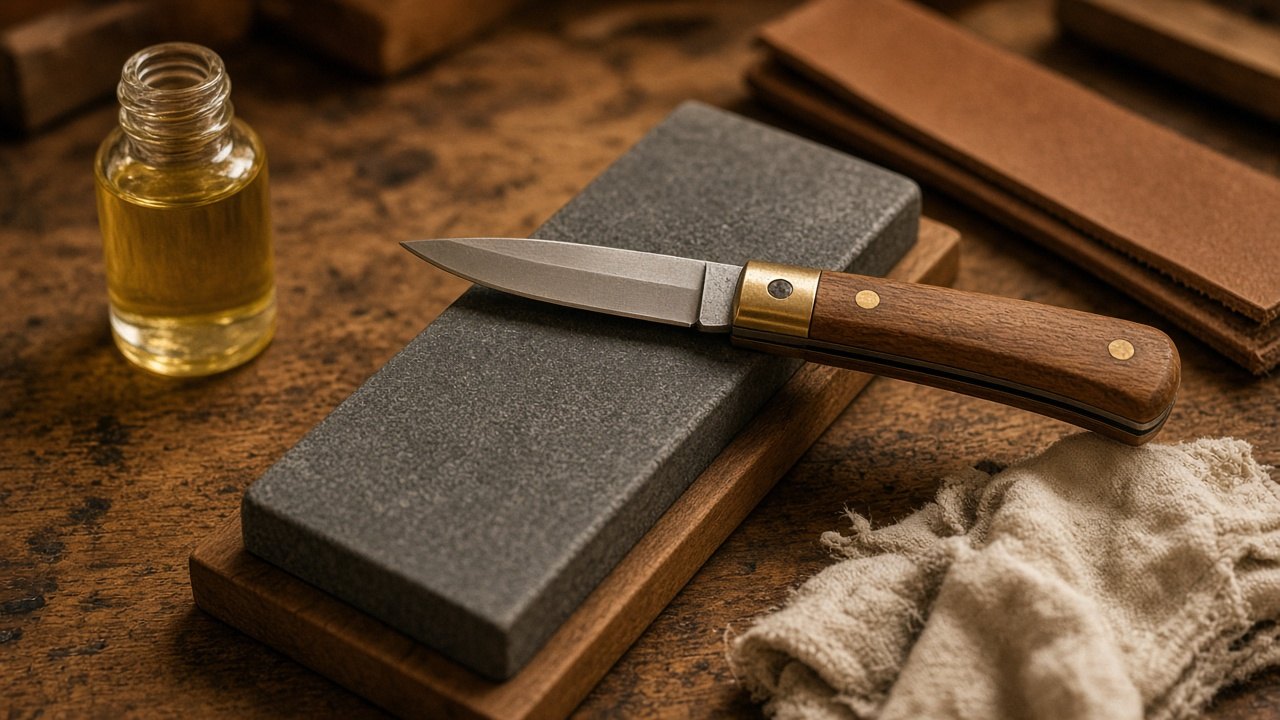
Keep it sharp, and it will feel like a better knife
A dull knife is more dangerous than a sharp one. It needs more force, it slips instead of biting, and your hand is behind that force when it goes.
Basic upkeep is not complicated:
- Wipe the blade dry after cutting anything wet, acidic, or salty. Northwest damp is hard on carbon steel.
- Put a drop of light oil on the pivot a few times a year, then work it open and closed.
- Strop or lightly hone before the edge is gone, not after. Maintaining an edge is much faster than rebuilding one.
- When it does get away from you, bring it in. We sharpen blades, from pocket knives to mower blades.
A reasonable way to choose
If you want a shortcut: a 3 inch drop point with a lock, a textured handle, and a mid-range stainless steel is the knife that disappoints the fewest people. Carry it for a month. You will learn quickly whether you wish it were smaller, larger, or shaped differently, and that is a much better basis for a second knife than a spec sheet.
Browse the knives category online, or come see what is on the counter at 215 N Olympic Ave. Call (360) 435-5523 if you want to know what is in stock before you drive in.
Frequently asked questions
What size pocket knife is best for everyday carry?
A 2.5 to 3 inch blade covers the vast majority of everyday cutting: packaging, cord, tape, twine, and food. It carries comfortably and does not feel excessive when you pull it out in public.
Is a locking blade necessary?
Not for light tasks, but a lock adds real safety when you cut toward yourself, work at height, or apply pressure. Slipjoints without locks carry lighter and remain a fine choice for gentle everyday use.
Which knife steel should I choose?
It depends on whether you will maintain it. Simpler stainless steels sharpen quickly and dull sooner. Harder, wear-resistant steels hold an edge far longer but take more effort to bring back. Match the steel to your patience, not to a spec chart.
How often should a pocket knife be sharpened?
Touch it up before it stops cutting cleanly rather than after. Light stropping every few weeks of regular use keeps an edge alive. A full sharpening once or twice a year suits most carriers. Bring it to our counter if the edge has gone.
Does Arlington Hardware sharpen knives?
Yes. We sharpen blades from pocket knives to lawn mower blades. Drop yours off at 215 N Olympic Ave in downtown Arlington, or call (360) 435-5523 with questions.