
Short answer: buy the tools the job in front of you actually requires, rent or borrow the ones you will use once, and let the rest accumulate slowly as real projects demand them. A pre-boxed 200-piece set is mostly filler you will never touch.
The most expensive tool is the one bought twice: once cheap because you were not sure, and again properly after the first one failed halfway through. Avoiding that is less about spending more and more about being honest with yourself about the job.
Start with the job, not the aisle
Walk in wanting “some tools” and you will leave with a set someone else chose for you. Walk in describing the job and the answer gets specific fast.
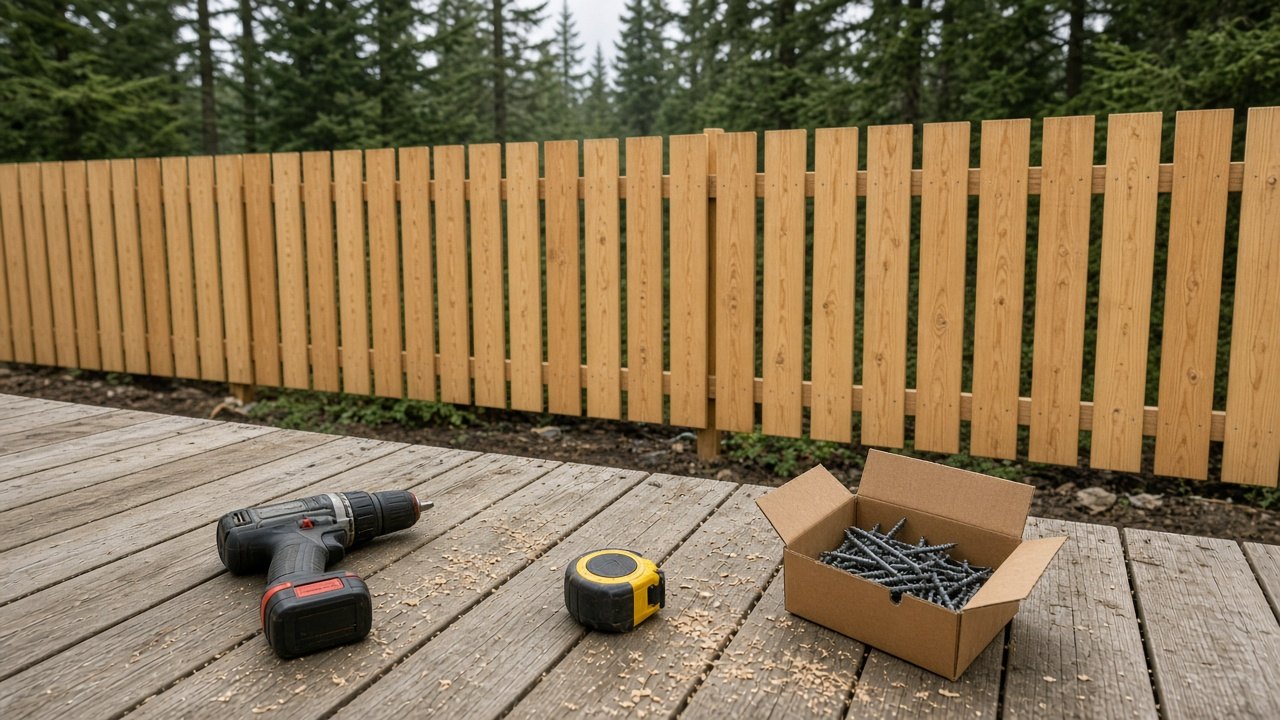
Before you shop, write down what you are actually doing. Not “fix up the yard.” Something like: build a 40 foot cedar fence, six foot boards, on sloped ground, into hard-packed soil. That sentence names the tools. The vague version names nothing.
The details that change the answer are usually:
- Material. Cedar, pressure treated, drywall, tile, and metal each want different blades, bits, and fasteners.
- Scale. Four holes is a hand job. Forty is an auger.
- Access. Tight corners, overhead work, and ladders change which tool is safe, not just which is fast.
- Repeat use. Will you do this again in two years, or never?
That last one is the real budget question, and it is worth its own answer.
Buy, rent, or borrow
A simple rule that saves people a lot of money: buy the tools you will use repeatedly, and find another way to get the ones you will use once.
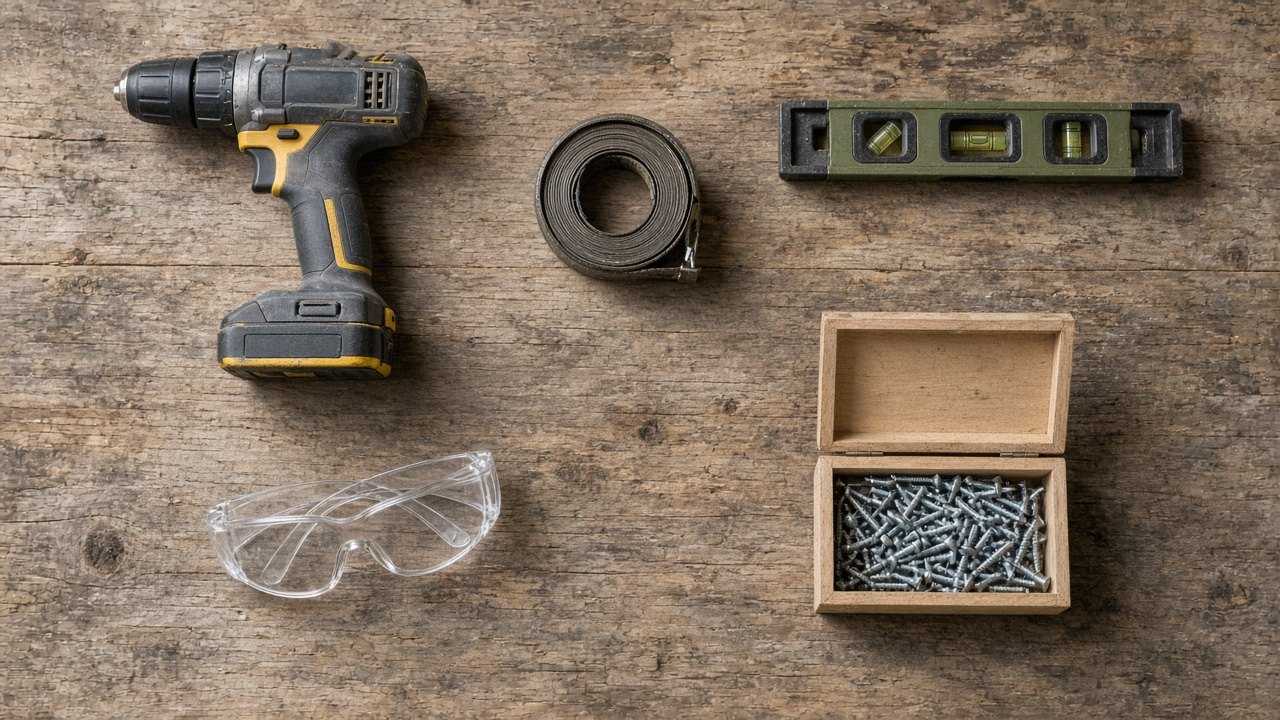
Anything you touch on most projects earns its shelf space. A drill, a level, a tape measure, a decent set of screwdrivers. Buy those once and buy them well, because you will handle them for twenty years.
Specialty equipment is different. A tile saw, a concrete mixer, a power auger, a floor sander. These are expensive, bulky, and used for a weekend every few years. Renting one costs a fraction of owning it and you do not store it afterward. Ask a neighbor too, since a lot of what sits in Arlington garages gets used twice a year.
The middle case is the interesting one. If a tool is cheap enough that renting twice would cost more than buying, buy it. If it is genuinely a one-time job, do not talk yourself into ownership because it feels like a deal.
Where to spend and where not to
Not every tool deserves the same money. A rough guide from watching what comes back broken:
Worth spending on: anything with a motor, anything that holds an edge, and anything whose failure hurts you. Cordless drills, saws, quality blades and bits, ladders, and safety gear. A cheap blade does not just cut slower, it wanders, burns the wood, and kicks.
Fine to buy modestly: tools that are essentially a shape. A pry bar, a putty knife, sawhorses, a bucket, a chalk line. There is not much to go wrong.
Worth spending on and often skipped: measuring and marking. A level that is not actually level ruins every cut downstream of it, and you will never know why the door sticks. Same with a bent square.
Bits and blades deserve a specific note. People spend real money on a drill and then feed it the cheapest bits available. The bit is what touches the work. Buying good bits improves cheap tools more than buying a better tool improves cheap bits.
The kit that covers most household jobs
If you are starting from nothing, this short list handles the large majority of home repairs without any filler:
- A cordless drill/driver with a basic bit set
- A 25 foot tape measure
- A torpedo level and a longer level if you hang anything
- Screwdrivers, or a driver handle with interchangeable tips
- Adjustable wrench and needle-nose pliers
- A utility knife with spare blades
- Safety glasses, and ear protection once anything is loud
Add to it when a project demands something. That is how a genuinely useful collection forms, and every tool in it earned its place.
Bring the problem to the counter
This is the part the internet is worst at. A product page cannot tell you that the fastener you picked will split cedar, that the bit you need is metric, or that there is a simpler way to do the whole thing.
Bring the broken part. Bring a photo of the wall. Bring the old bolt. Our crew has walked people through the same fence, deck, and plumbing repair many times, and the five minute conversation at the counter routinely saves a second trip. That is most of what our departments are for: hardware and fasteners, tools and power tools, electrical, plumbing, paint, and the lumberyard, all under one roof at 215 N Olympic Ave.
We also do things that shorten the job itself. Blade sharpening, key cutting, re-keying locks, paint color matching, and battery replacement all happen at our counter.
A short checklist before you buy
- Write the job as one specific sentence, including material and scale.
- List the tools that sentence requires. Ignore everything else.
- Mark each one buy, rent, or borrow based on how often you will use it again.
- Spend on motors, edges, measuring, and safety. Save on shapes.
- Ask at the counter before you commit, especially about fasteners.
Call (360) 435-5523 or stop in and describe the project. It is usually a shorter conversation than you expect.
Frequently asked questions
Should I buy a big tool set or individual tools?
Individual tools, in most cases. Large pre-boxed sets pad the piece count with sizes and accessories you will never use, and the pieces you do use are often the lowest quality in the box. Buy the tools your project needs and add over time.
When is it better to rent a tool than buy one?
Rent when the tool is expensive, bulky to store, and needed for a single job. Tile saws, concrete mixers, augers, and floor sanders are common examples. Buy tools you will reach for on most projects.
Which tools are worth paying more for?
Anything with a motor, anything with a cutting edge, anything that measures, and anything protecting you. Cheap blades and bits waste good tools, and an inaccurate level ruins every cut that follows it.
What basic tools should every household own?
A cordless drill with a bit set, a 25 foot tape measure, a level, screwdrivers, an adjustable wrench, needle-nose pliers, a utility knife with spare blades, and safety glasses. That short list handles most household repairs.
Can someone help me figure out what I need?
Yes. Bring the broken part, a photo, or the old fastener to our counter at 215 N Olympic Ave and describe the job. Our crew has walked people through the same repairs many times and can point you to the right aisle.